FAQs
Application Process
Am I eligible to apply?
To be considered for the Young Scholars Program, the applicant must meet the following eligibility requirements:
-Currently in 7th grade and/or entering 8th grade in the fall of 2026.
-Since the beginning of 6th grade, earned grades of all or mostly As in school, with no Cs or below in core academic subjects (English/Language Arts, Math, Science, Social Studies/History).
– Demonstrate unmet financial need. Applicants with a family adjusted gross income (AGI) up to $95,000 are eligible to apply. During the selection process, the Foundation will conduct a full financial review which will take into account all income and assets of the student and the student’s parents. The median family adjusted gross income of last year’s entering cohort of Cooke Young Scholars was approximately $49,000.
– Currently attending middle school in the U.S. and planning to attend high school in the U.S.
How do I obtain the application?
The application for the Young Scholars Program is online only. A link to it is posted on the Jack Kent Cooke Foundation website during the application open period. We do not have a paper version of the application available.
I forgot my User ID or password.
On the Log In/Register page, click the “Forgot your password?” link. To reset your password, enter the email address associated with your account and the applicant’s birthdate and click the “Submit” button. You will receive an email with a link to reset your password. If you need additional help, email scholarships@jkcf.org.
How do I change my password or Username?
If you would like to reset your password, go to the Log In/Register page, click the “Forgot your password?” link, and follow the online instructions.
Do I have to finish my application all at once, or can I save it and come back later?
You can save your application by clicking the Continue button at the bottom of the page, or navigating to another section of the application using the dashboard on the left of the screen. This will allow you to return to it at a later time to continue or update as desired. You can return to your application as often as needed until you submit it or the deadline has passed. If you close your browser window without using the Continue button, the information entered on that page will not be saved.
How do I submit my application and supporting documents and by when?
Your completed application must be submitted online by 11:59 p.m. in your local time zone on the day of the deadline. This includes all completed sections of the online application, your report cards that must be uploaded to your application, and submitted recommendation forms by your recommenders.
If my legal parents are separated/divorced/never married, do I need to include both of their incomes?
What kind of student writing is required in the application?
The Young Scholars Program application requires students to respond to three short answer prompts each limited to 200 words in length, and one essay prompt limited to 350 words in length. These responses must be the student’s own writing. The 2026 prompts are as follows:
- What’s the most interesting question you’ve ever asked yourself? How have you tried to find the answer? Tell us about your journey to learn more about this question and what you’ve discovered so far.
- Choose one of the current activities you listed in your application and explain why you enjoy doing it. How have you demonstrated leadership through this activity? How can you continue to grow as a leader?
- Tell us about a time you made something—an idea, object, plan, game, or workaround. Why did you make it, what challenges did you encounter, and what did you learn through the process of creating it?
Please choose one of the prompts below and respond. Your essay should help the scholarship selection committee get to know you and your current interests better.
Your response is limited to 350 words.
Essay Topics
- Imagine you get to be ‘Principal for a Day’ at your dream school. What would make this school special? Think about everything – from what students would learn, to how they would learn it, to how everyone would treat each other. Tell us about your ideas and why you think they would help students love learning.
- What have you read or watched recently that sparked new ideas or that you found fascinating? To whom would you recommend it and why?
What does a complete application include?
A complete application will contain the following materials:
- Student Application: Includes demographic information about applicant and family, and academic information such as grades, activities and awards, and writing.
- Report cards from 6th and 7th grade.
-
Two Academic Recommendations – one must come from a teacher who taught you in a core academic subject during the past two years (i.e., English/language arts, math, science, social studies/history) and the other recommendation may come from a different core subject teacher or a non-core subject teacher in your school.If you are homeschooled, we strongly encourage you to obtain recommendations from educators you have interacted with other than your parents (for example, a teacher from a course you took at a local college, someone who has tutored you in an academic subject, an instructor with whom you have done research, etc.).
Can my recommender submit a letter of recommendation instead of or in addition to completing the online form?
No, the only acceptable recommendation for this application is the online form. Letters of recommendation will not be accepted in lieu of or in addition to the online form.
When will the recommender know that it is time to submit the recommendation?
Recommenders will receive an email with instructions about completing the recommendation form. It is the applicant’s responsibility to monitor the status of your application and follow up with your recommenders to be sure they have received the instructions and completed their online forms.
How does the recommender submit a recommendation?
Applicants will enter the recommender’s email address and contact information in the application. The recommender will then receive an email with instructions and a link to the recommendation form they will complete and submit. When the form is complete, they will click the “Submit” button and a message will appear requesting confirmation that the form is ready to submit. When they click “Yes,” a confirmation screen will appear to verify the form has been submitted. The recommender will also receive a confirmation email.
How long does the recommender have to submit their recommendation form?
Recommenders have the same deadline as applicants. We encourage applicants to monitor the status of their application and communicate with their recommenders to make sure they successfully submit the form on time.
Does the Young Scholars Program application require test scores?
The Cooke Foundation does not require students to submit any test scores to apply for the Cooke Young Scholars Program. This includes SAT or ACT scores and state standardized test scores.
What happens if an application is incomplete or is submitted after the deadline?
Applications must be submitted by the deadline of April 29, 2026 at 11:59 p.m. in your local time zone. Incomplete applications and those submitted after the deadline will not be considered.
Does the Foundation allow the use of generative AI tools to complete my application?
The Cooke Foundation expects that your application responses are wholly your own. We require that the information you submit in this application (including essays, short answers, and personal statements) is truthful and written from your unique perspective. It will not help your application if you use generative artificial intelligence (Gen AI) tools such as ChatGPT to tell your story, as the output tends to be generic and will not allow Cooke application reviewers to gain an understanding of who you are.
How do I properly log out?
Before you log out, always click the “Continue” button found at the bottom of every page of the application. This will ensure your application progress has been saved. When you are ready to log out and exit your account, use the “Logout” button at the top right of the screen. You will be able to return to the application to continue and update as frequently as desired until you submit your application or the deadline has passed.
Selection Process
What are the selection criteria?
The Cooke Foundation reviews each application with assistance from a committee of education experts. The Foundation selects Cooke Young Scholars using the criteria below. While all criteria are scored, academic ability and achievement is the most heavily weighted criterion.
-Academic ability and achievement: How does the applicant stand out from others in terms of their academic ability and achievement? (Eligible applicants must have earned grades of all or mostly As, with no Cs or below in core academic subjects – English/language arts, math, science, social studies/history – since the beginning of 6th grade).
-Leadership: How does the applicant demonstrate initiative, serve as a positive role model, and contribute positively to the world around them?
-Persistence: How does the applicant show determination toward accomplishing their goals and overcoming challenges?
-Financial Need: Demonstrate unmet financial need. Applicants with a family adjusted gross income (AGI) up to $95,000 are eligible to apply. During the selection process, the Foundation will conduct a full financial review which will take into account all income and assets of the student and the student’s parents. The median family adjusted gross income of last year’s entering cohort of Cooke Young Scholars was approximately $49,000.
How do my legal parents complete and submit the Parent Information Form(s)?
The Cooke Foundation requires both of the applicant’s legal parents to submit Parent Financial Forms in later stages of our review process for the Young Scholars Program. For the application, we only require one of the applicant’s legal parents to submit AGI (adjusted gross income) information. Separate Parent Financial Information Forms will be collected later in the process if the student’s legal parents are not married to one another or do not reside in the same household. The Cooke Foundation considers the legal parents to be the applicant’s biological parents, adoptive parents, or legal guardians.
My other legal parent has been asked to submit financial information. What do I do if they cannot or will not submit the information?
How many Cooke Young Scholars are selected?
The number of Scholars selected varies from year to year. In 2025, 65 new Scholars were selected.
When and how are the scholarship winners announced?
All applicants are notified in June about whether they will move on in the process. These applicants will enter the second half of the review process which continues through summer. Recipients of the scholarship are notified via email in early September.
What the Scholarship Covers
What opportunities and support do Cooke Young Scholars receive?
The Young Scholars Program provides educational and college advising as well as financial support for academic and extracurricular enrichment from 8th grade through high school. Beginning in 8th grade, Cooke Young Scholars:
- Participate in high-quality academic and extracurricular opportunities in their local community, on college campuses, and around the globe.
- Develop the knowledge, talents, and leadership skills to be significant contributors.
- Set and reach academic and talent goals that will prepare them to be competitive, well-informed applicants for our nation’s best colleges and universities.
Each receives a unique combination of opportunities that may include:
- Guidance in selecting a high school and, if necessary, support in applying to a private or magnet high school.
- Summer academic or enrichment programs.
- Computers, software, or other learning technology.
- Specialized support in music, art, science, math, or other subjects.
- Connection with a nationwide community of Cooke Young Scholars.
- Resources for career exploration and mentoring.
- College counseling.
Are there any mandatory requirements?
As a Cooke Young Scholar, what is expected of me?
The Foundation expects each Cooke Young Scholar and their family to communicate at least once every four to six weeks and work closely with their designated educational adviser to develop and follow an annual Individualized Learning Plan (ILP). The Foundation also expects each Young Scholar to think big, work hard, and:
- Maintain a strong academic record (As and Bs in an unweighted GPA calculation) while taking an appropriately challenging course load.
- Act with honesty and personal integrity.
- Demonstrate character and leadership.
- Be concerned about and engaged in their community.
- Maintain a good disciplinary record.
- Participate in residential summer programs.
- Follow through with the opportunities and services outlined in their ILP.
- Do their best to take the steps that lead to achieving their ILP goals.
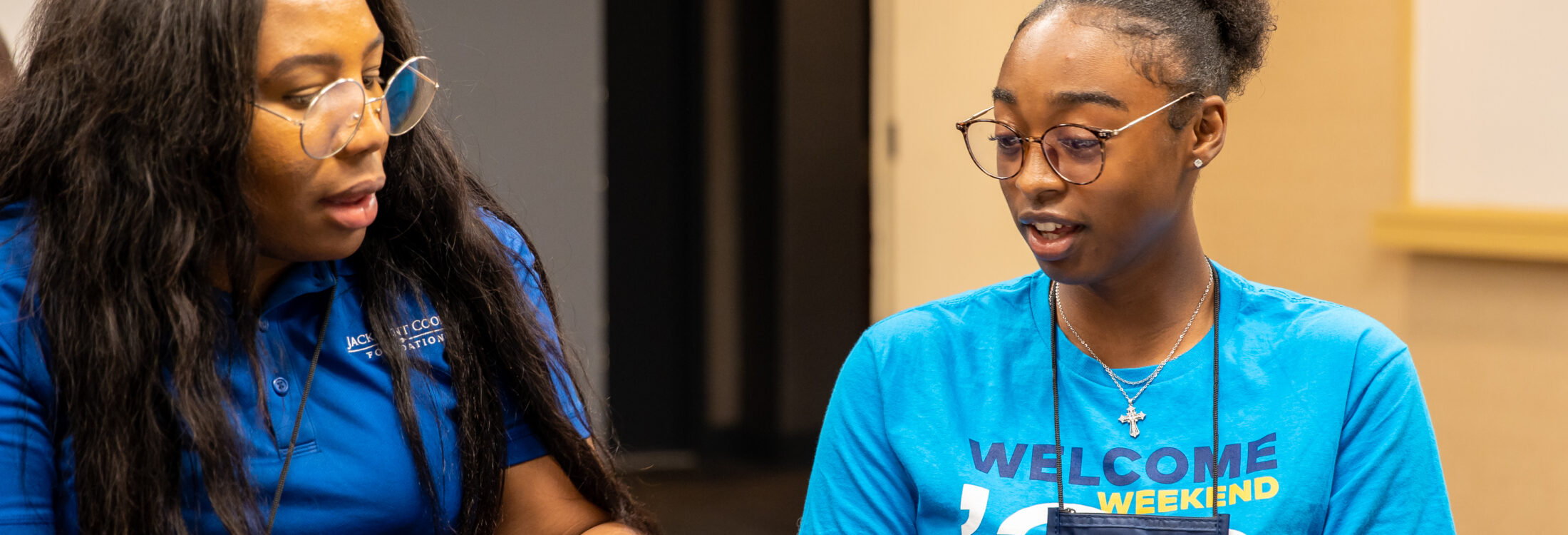
- Attend Welcome Weekend with a parent or other adult supporter during fall of 8th grade.
- Attend First Summer with their Cohort (students admitted in the same year) during the summer before 9th grade.
- Attend a summer experience focusing on college search and readiness during the summer before 12th grade.
- Work cooperatively with Foundation staff.
These responsibilities are outlined in a letter of commitment included in the award packet, signed by the Cooke Young Scholar and the Scholar’s parent(s) or guardian(s). Families and Cooke Young Scholars discuss program expectations in depth with the educational adviser prior to signing.
As a parent/guardian of a Cooke Young Scholar, what is expected of me?
We expect parent(s)/guardian(s) of Cooke Young Scholars to partner and communicate regularly with their educational advisers. Together, we build a strong support network and help Cooke Young Scholars think big, work hard, and achieve. Here are a few ways parent(s)/guardian(s) partner with us:
- Be sure your Scholar communicates with their educational adviser regularly.
- Communicate with the educational adviser about potential academic opportunities and plans for your student.
- Celebrate your Scholar’s academic, extracurricular, and personal accomplishments with his/her educational adviser.
- Check that your Scholar submits his/her school-issued report card promptly upon request.
- Submit program renewals, forms, including tax forms and supporting documents, during the renewal process in a timely manner.
What should Cooke Young Scholars and their families expect from the educational adviser?
Educational advisers work closely with a group of approximately 35 Young Scholars in grades eight to twelve. They collaborate with the scholar and family, providing options, asking questions, and offering input to help:
- Select a high school.
- Plan an appropriately challenging four-year academic course load.
- Improve time management and study skills.
- Set academic, talent, and personal goals each year.
- Construct a yearly Individualized Learning Plan (ILP) that connects services to the Scholar’s goals.
- Research educational opportunities and services.
- Develop talents and expertise.
- Navigate the educational system.
- Troubleshoot challenges.
- Achieve academic and extracurricular goals.
- Prepare to thrive in our nation’s top-performing colleges.
What is an Individual Learning Plan (ILP)?
Created to help each Cooke Young Scholar meet their academic and extracurricular goals, an Individualized Learning Plan (ILP) is a map of the annual educational opportunities funded by the Foundation.
ILPs are designed to help scholars develop and nurture academic skills, explore passions and interests, and stretch outside of their comfort zone. Cooke Young Scholars experience opportunities that may include:
- Residential summer programs
- School expenses
- Music, art, or athletic lessons and supplies
- Books and magazines
- Software and technology
- Distance learning courses
- Internships
- Conferences
- Travel opportunities
Who decides what is included in a Cooke Young Scholar's ILP?
The educational adviser works closely with the Scholar, their family, and others to understand the abilities, talents, and goals of each Cooke Young Scholar. Educational advisers then develop individualized recommendations that can move the Scholar toward those goals. Family input is carefully considered, and parent(s) or guardian(s) always have the right to decline any recommendation. The Young Scholars Associate Director and other staff work directly with the educational adviser to assure that a realistic, balanced plan is presented to the Scholar and family.
How can I use the scholarship?
While Cooke Young Scholars are selected in the 8th grade, funding for services does not begin until the summer before 9th grade. Successful Cooke Young Scholars use the scholarship to nurture academic skills, explore passions and interests, and stretch outside of their comfort zone. Cooke Young Scholars also make the most of their relationship with their educational adviser to learn how to set goals, make educational decisions, maximize opportunities, succeed in high school and prepare for college.
Does the Young Scholars Program primarily provide boarding school scholarships?
No, the primary purpose of the program is to find challenging and enriching educational experiences for Young Scholars. Educational advisers work with Scholars and their families to learn about their local high school options, and, if appropriate, support the process of exploring other options. The program does not require or direct students to attend any type of school. In some cases, the program may provide support for private boarding school.
How long will scholarship support continue?
The Young Scholars Program is designed to support students from 8th grade through senior year of high school. Each school year, the Foundation evaluates Cooke Young Scholars through a renewal process. Assuming program expectations are met by the Scholar and family, the scholarship support continues through senior year of high school.
General
Are there any costs or fees associated with applying for Cooke Scholarships?
There is no cost or fee associated with completing and submitting a Cooke Scholarship application.
Who was Jack Kent Cooke?
Mr. Cooke was a philanthropist, businessman, and devotee of learning and the arts who left the bulk of his estate to establish the Jack Kent Cooke Foundation to help students of exceptional promise reach their full potential through education.
How can I receive more information about the Foundation and the Young Scholars Program?
Are you a student applying to our scholarships? Click here to sign up and receive important information.
Are you a parent, guardian, or family member supporting your family member’s educational goals? Click here to sign up and receive more information.
Are you a counselor or educator working with students at a school, college, or community-based organization? Click here to sign up and receive more information.
Contact Us
The application for the Cooke Young Scholars Program is now open. The deadline is April 29, 2026.
If you have any questions regarding your application, please use the chat in the lower right corner or email us at scholarships@jkcf.org.